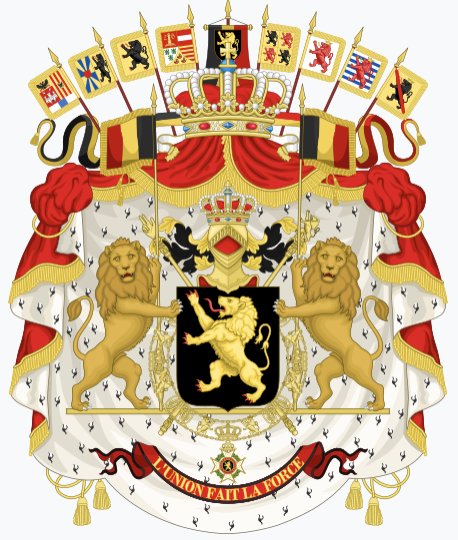
How can we create a community? National symbols are important in uniting people and providing a sense of national pride and community. One major symbol of Belgium that stood out to me was the lion, which appears on the official coat of arms and carries the motto “Unity Makes Strength”. Through my discoveries of Belgium and its culture, I discovered that not only does the lion represent strength, it also has a rich history behind the creation dating back to 1583.
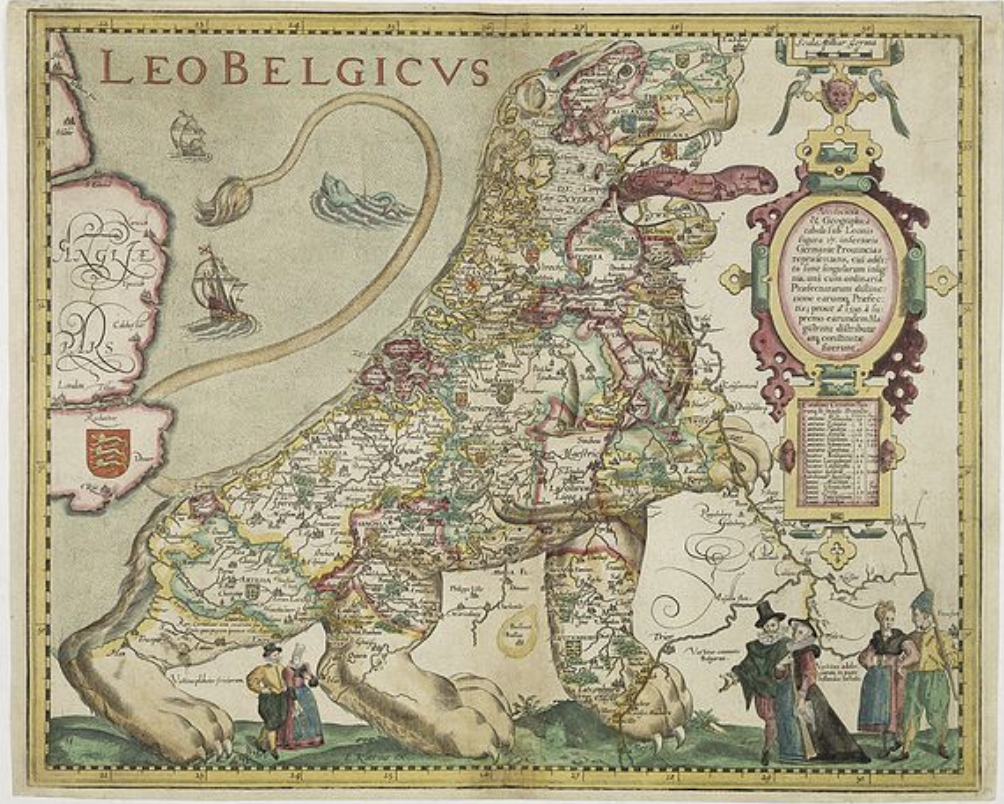
Leo Belgius was first drawn in 1583 by a cartographer, the map drew Belgium in the shape of a lion with the head located in the North East and the tail in the South East of the map. The original map covers modern day Netherlands, Luxembourg, Belgium and parts of Northern France. The motto first originated after the Revolution in 1837, in which the Dutch were named equal in status to the French and the 9 Belgian provinces were united. This symbol is now used as the Belgian coat of arms and printed on official government documents and a lion was also used on the kits of the Belgian national soccer team from 1905 to 1980.
Leo Belgius and its history inspired me to look into how older history ties into and affects modern culture and Belgian people today. The meaning of unity and strength that the lion symbolises was shown when Belgium and its people came together in solidarity after the terror attacks in Brussels in early 2016. To me, this shows the importance of national pride and how an old motif of unity can connect to modern events in which a nation must come together.
 Student Lens - Travel Captured